
Ciliopathies
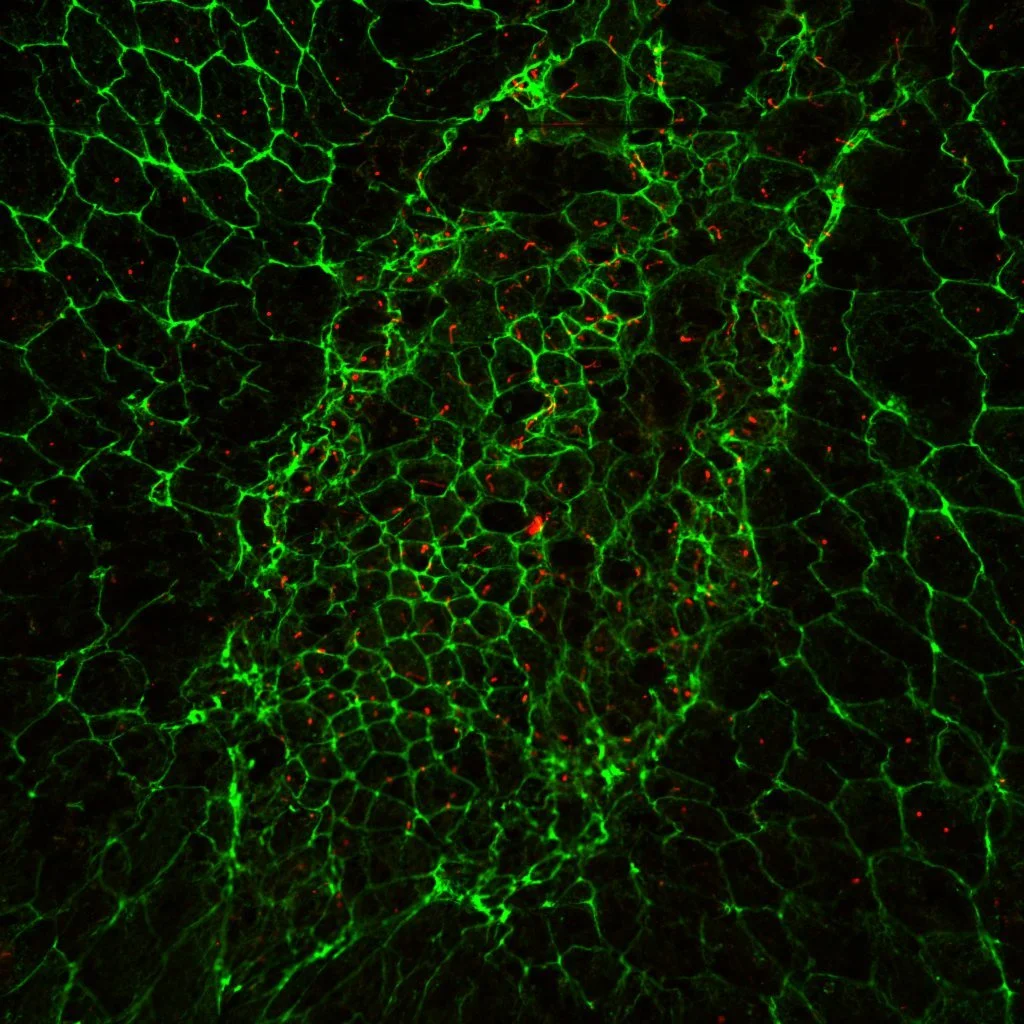
X. tropicalis Gastrocoel Roof Plate - cell borders marked with Phalloidin, cilia labeled with Arl13bStephen Viviano
Cilia are microtubule-based organelles that project from the surface of nearly every vertebrate cell type and play critical roles in signal transduction, microfluid movement, and development. Our lab uses the frog Xenopus as a powerful vertebrate model system to investigate the molecular and cellular mechanisms underlying ciliary assembly, maintenance, and signaling, and their roles in development and disease. The optical clarity of Xenopus tadpoles, combined with the ease of genetic manipulation through microinjection, makes it an ideal platform for dissecting how disruptions in ciliary pathways lead to disease and for identifying potential therapeutic targets.