
Deniz Lab
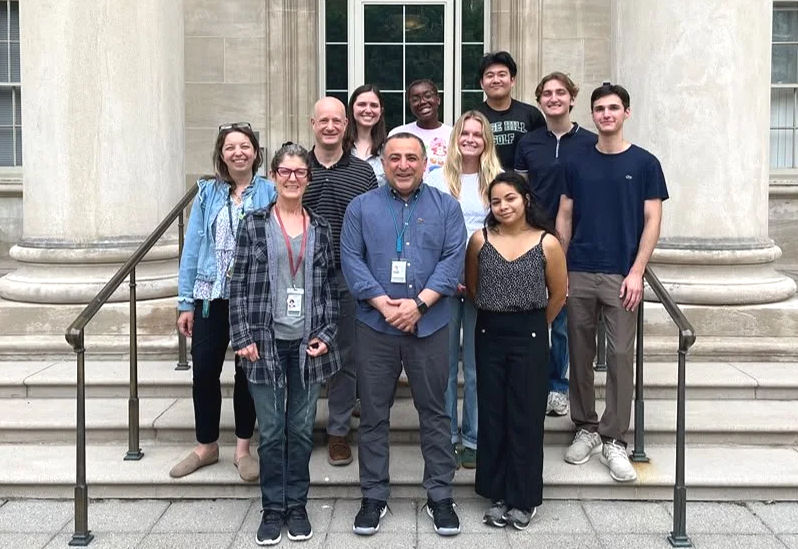
Our overarching goal in the Deniz lab is to understand the genetic underpinnings of numerous congenital disorders, including hydrocephalus and ciliopathies, among others. We utilize a patient-driven gene discovery approach, striving to further our understanding of the basic biology underlying brain development and other organ systems while simultaneously generating insights into the pathogenesis of human diseases. We model our patient-derived candidates in Xenopus tropicalis, a high-throughput model organism that closely parallels human embryonic development.
Thank you for visiting our website!
-
Inherited and/or de novo variants in genes can cause congenital hydrocephalus (CH); however, the mechanism of these genes on disease pathogenesis, including physiological embryonic CSF flow patterns, neuronal specification and differentiation, and ventricular morphogenesis, are poorly understood.
-
Cilia are membrane-bounded projections from the cell surface and can be either motile or immotile, acting as signaling centers. Both types of cilia are upstream of diverse biological processes in human physiology, cell signaling, and embryonic development. Defects in ciliary structure or function can impact the development and/or function of numerous organs within the body, leading to complex disorders.
-
Rare diseases, though individually rare, affect millions of patients and their families every year. Though recent efforts to identify genetic variants in congenital disorders has expanded over the years, many families are still left without a clear genetic diagnosis. The Pediatric Genomics Discovery Program strives to work with these families and begin to find answers for their individual disorders.